



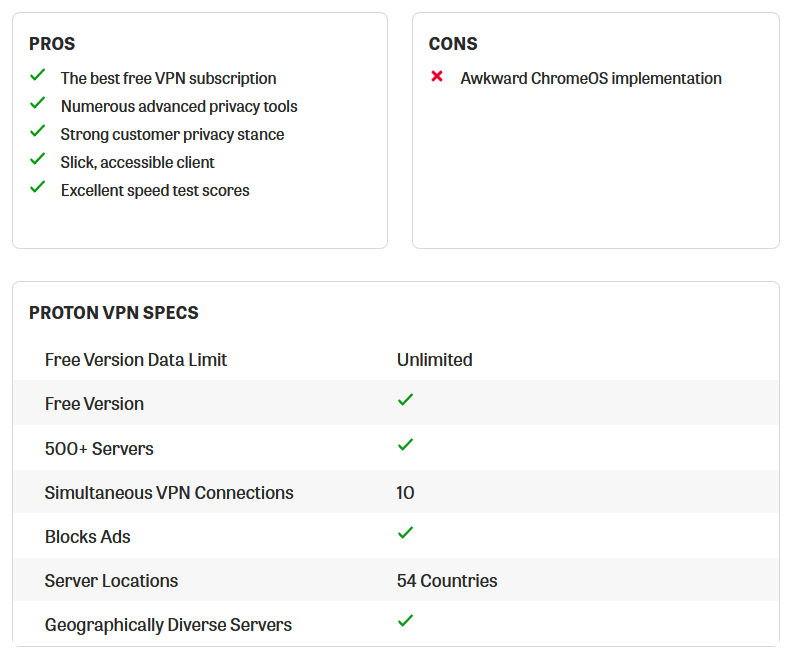
Proton VPN, a noteworthy component of the expanding Proton online services suite, stands out as a polished virtual private network (VPN) solution equipped with a remarkable array of advanced functionalities. Notably, it boasts the most impressive free subscription plan available in the market. When it comes to combining affordability, feature richness, and design finesse, few competitors can rival its offering. The premium subscription of Proton VPN is particularly noteworthy, presenting exceptional value for users seeking a VPN. What enhances this offering even further is its inclusion of secure email, storage, and calendar tools within the package. This comprehensive suite of services earns Proton VPN a rare five-star rating, securing it the coveted title of our Editors’ Choice award.
How Much Does Proton VPN Cost?
In 2022, Proton underwent a comprehensive transformation of its entire product lineup, adopting a fresh pastel purple aesthetic, altering its name from ProtonVPN to Proton VPN, and introducing a novel pricing structure. Notably, existing subscribers of Proton VPN (or Proton Mail) before these changes were afforded an upgrade opportunity while retaining their existing rates. This proved especially advantageous for longstanding Proton VPN users, as the new VPN plans granted access to premium Proton Mail features, space on the cloud-based Proton Drive, and utilization of the Proton Calendar scheduling tool.
Of particular satisfaction is the continuation of Proton VPN’s impressive free VPN subscription tier. This free tier encompasses three VPN server locations (Japan, Netherlands, and the US) and permits connection of a single device at a time. To access this tier, creating a Proton VPN account is necessary. Remarkably, this account also grants access to the full suite of Proton products, including Drive, Calendar, Mail, and the new Proton Pass password manager. Notably, neither Mullvad VPN nor IVPN necessitates account creation or demands user information even for paid subscriptions.
The distinctive value of Proton VPN’s free version lies in its lack of data usage limitations. In contrast, VPNs like TunnelBear VPN impose restrictions, capping secured traffic at 500MB per month (expandable to 1.5GB). This renders Proton VPN the preferred choice among the assortment of free VPNs we’ve evaluated.
However, the landscape becomes intricate when considering subscription options. One can opt for a Mail Plus subscription to access premium Proton Mail features while maintaining the free VPN offering, or choose the premium VPN Plus package while retaining free Proton Mail features. Unfortunately, purchasing a Proton Drive Plus or Proton Pass subscription does not unlock premium Mail or VPN attributes, and standalone acquisition of Proton Calendar isn’t feasible.
For the purpose of this review, we assessed the $11.49-per-month Proton VPN subscription ($71.88 annually, $119.76 biennially), which stands significantly pricier compared to its previous rates. The current average monthly cost across 36 VPNs is $10.03, while the average annual subscription amounts to $66.95. Consequently, Proton VPN now falls among the more expensive VPNs in our evaluations, albeit still more affordable than NordVPN’s $12.99 per month or Surfshark VPN’s $12.95 per month.
Several services with fewer features undercut Proton VPN’s pricing. Mullvad VPN, recognized for privacy and robust features, charges a mere 5 euros per month ($5.48). Additionally, Private Internet Access VPN offers economical annual plans at $39.95. Nevertheless, we recommend cautiousness with long-term VPN subscriptions and propose initial exploration of short-term or free plans to ascertain compatibility before committing to higher-cost options.
The paid plan from Proton VPN, labeled VPN Plus, provides access to exclusive VPN servers within Proton VPN’s network, tailored for paying customers. In contrast to free servers, these likely offer less crowded performance, potentially yielding better service. VPN Plus subscribers can simultaneously use up to 10 devices, doubling Proton’s previous limit and aligning with industry norms. However, several VPN companies have abolished device constraints altogether.
VPN Plus subscribers unlock multi-hop connections to Secure Core servers and access to the Tor anonymization network via VPN—both rare features. While Tor access doesn’t necessitate payment, its inclusion is advantageous. Notably, VPN Plus subscribers are restricted to the free versions of Proton Calendar, Drive, and Mail.
The pinnacle offering in Proton’s array is Proton Unlimited, priced at $12.99 per month, $119.88 annually, or $191.76 biennially. Although it doesn’t introduce additional VPN features, it substantially enhances the value of Proton’s other offerings. This tier encompasses 500GB storage shared between Mail and Drive, 15 email aliases, unlimited daily email messages, up to 20 calendars, calendar sharing, 20 vaults in Proton Pass, unlimited Proton Pass email aliases, and a Proton Pass authenticator app. Notably, Mail Plus and Drive Plus options are more budget-friendly but lack certain features. Unlimited encapsulates the full spectrum of Proton’s offerings.
For those seeking more extensive solutions, Proton extends subscription plans for businesses and families. Business plans initiate at $6.99 per user per month, with scalability options. Family plans encompass all aspects of the Proton Unlimited package, elevating Proton Mail email addresses to 90 and expanding Proton Drive storage to 3TB. A Family plan accommodates six users, priced at $29.99 per month, $287.88 annually, or $479.76 biennially.
In early 2023, Proton VPN introduced browser extensions for Chrome and Firefox, catering to browsers based on these platforms like Microsoft Edge. These extensions operate as proxies, rerouting browser traffic exclusively (and securely) to designated locations via HTTPS encryption. This functionality proves beneficial for accessing geo-restricted content or enhancing security when installing the complete VPN application isn’t feasible. Although convenient, these extensions do not substitute the comprehensive VPN experience.
Several aspects underwent change in Proton’s transition to its new form. The Proton VPN Basic plan at $5 per month has been discontinued, eliminating the mid-range, budget-friendly option. Furthermore, custom add-ons that were once available, such as additional simultaneous connections, have been restructured. Existing subscribers retaining these modifications will maintain them, but new users seeking such features must consider switching to a Proton VPN for Business account. Meanwhile, former Visionary tier subscribers now enjoy an augmented 3TB Proton Drive storage alongside other enhancements.
Subscriptions for Proton VPN can be secured via major credit cards, PayPal, or Bitcoin payments (requiring account creation). Notably, Proton VPN accepts cash payments sent directly to their headquarters, a feature limited to only a few VPN providers like Mullvad VPN and IVPN.
VPNs undoubtedly enhance online privacy but do not guard against all threats. Our recommendation extends to adopting a password manager, enabling multi-factor authentication when possible, and installing antivirus software for comprehensive security.
Pros and Cons of Proton VPN
What Are Proton’s Secure Core Servers?
The Proton VPN Plus tier introduces a distinctive feature known as multi-hop Secure Core servers, which warrants a more in-depth explanation.
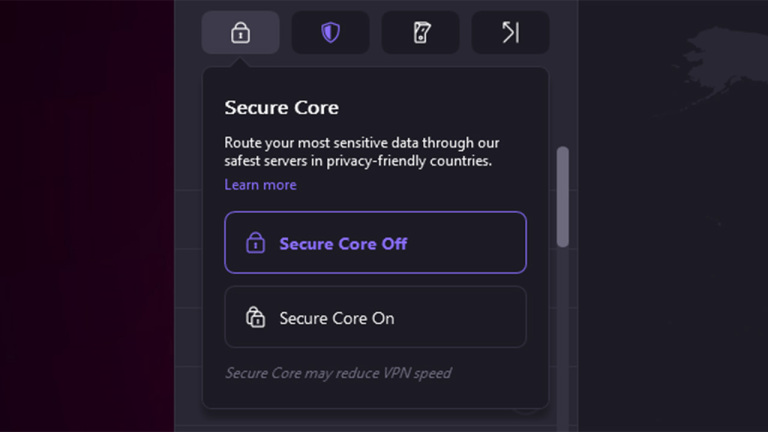
When you activate a VPN, your internet traffic undergoes encryption and is routed through a server managed by the VPN company before being released onto the broader internet. In a multi-hop connection, your traffic traverses two servers—one operated by the VPN company and a second one—before finally exiting onto the internet. Many leading VPN services incorporate multi-hop connections into their offerings. CyberGhost VPN, for instance, emphasizes the security of its NoSpy data center. While most services define fixed paths for multi-hopping, IVPN permits users to choose any two servers for hopping.
Engaging Secure Core servers results in your VPN connection passing through two hops. Initially, your device connects to the Secure Core servers, followed by onward connection to the VPN server you designate. Proton VPN asserts that its Secure Core servers exclusively reside in countries with robust privacy laws and are directly owned by the company. These servers are physically located in secure facilities, such as repurposed military bases.
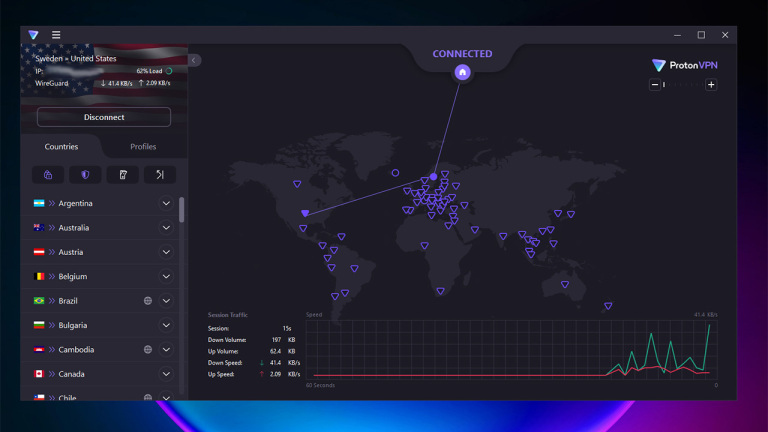
While a VPN establishes protection for your data through an encrypted tunnel, this safeguard is undermined if an attacker gains control of the VPN server. Although such an occurrence is rare, the Secure Core server approach ensures the security of your information from your device to the Secure Core server, which remains heavily guarded. Even if a subsequent VPN server you connect to becomes compromised, any potential attacker won’t be able to access your information. This is because your traffic will appear to originate from the Secure Core server, rather than your actual device. This setup mirrors elements of the Tor network’s design, though Tor employs a more intricate structure with multiple intermediate hops between you and your destination.
Notably, multi-hop connections often involve a trade-off in terms of speed and performance, which should be considered. Nonetheless, this is an exceptional feature that provides an added layer of security and should offer reassurance even to the most security-conscious individuals.
Proton VPN Is Our Top Choice
Proton VPN has consistently held a special place in the hearts of users due to its robust privacy policies and comprehensive range of advanced VPN features. In essence, it encompasses all the essential VPN functionalities users expect, and despite a substantial price increase, it still represents good value for money. Notably, its free version stands out, offering unlimited bandwidth usage for subscribers. It stands as our top recommendation for those seeking a free VPN solution. Additionally, the seamless integration with Proton’s secure email, cloud drive, password manager, and calendar applications elevates its excellence further, presenting a comprehensive package for enhancing online privacy.
Over time, Proton VPN has made remarkable progress. The service has expanded its server count, locations, and simultaneous connections, effectively doubling its offerings. This growth has demonstrated that the company can scale its services without compromising its core values. Significantly, Proton VPN continues to prioritize its reputation as a privacy-focused entity, a welcome departure from the industry trend where many VPNs emphasize speed and video streaming. The 2022 audit serves as a valuable endorsement of the company’s commitment to privacy.
In our assessment, Proton VPN is emerging as the benchmark for the VPN industry. This is aptly reflected in our perfect five-star rating and the honor of receiving our esteemed Editors’ Choice award.


